← Proof · Panel · Vogue Greece
Technology in Fashion and the AI Shift: Leanne Elliott-Young at Vogue Greece Change Makers IV
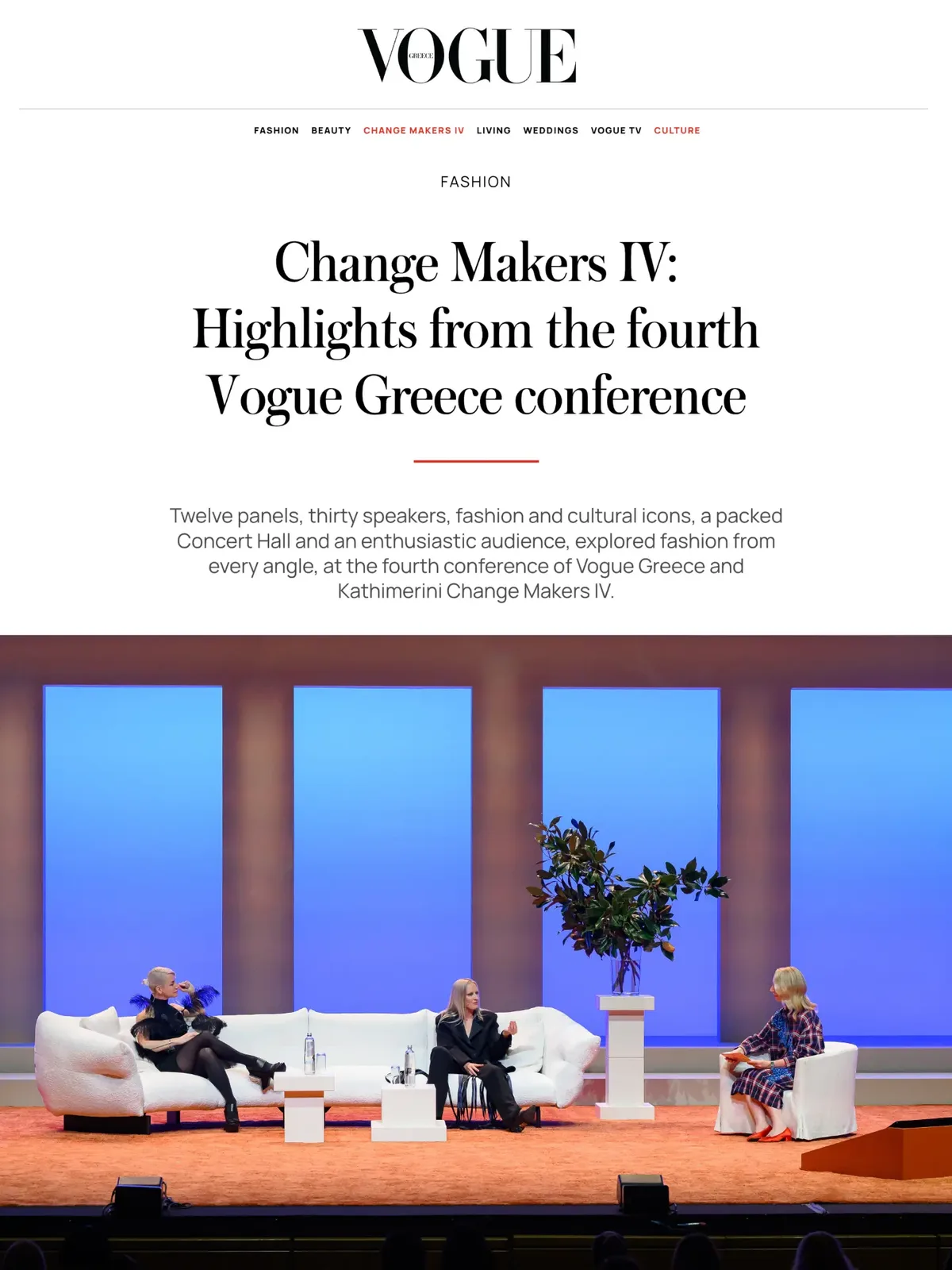
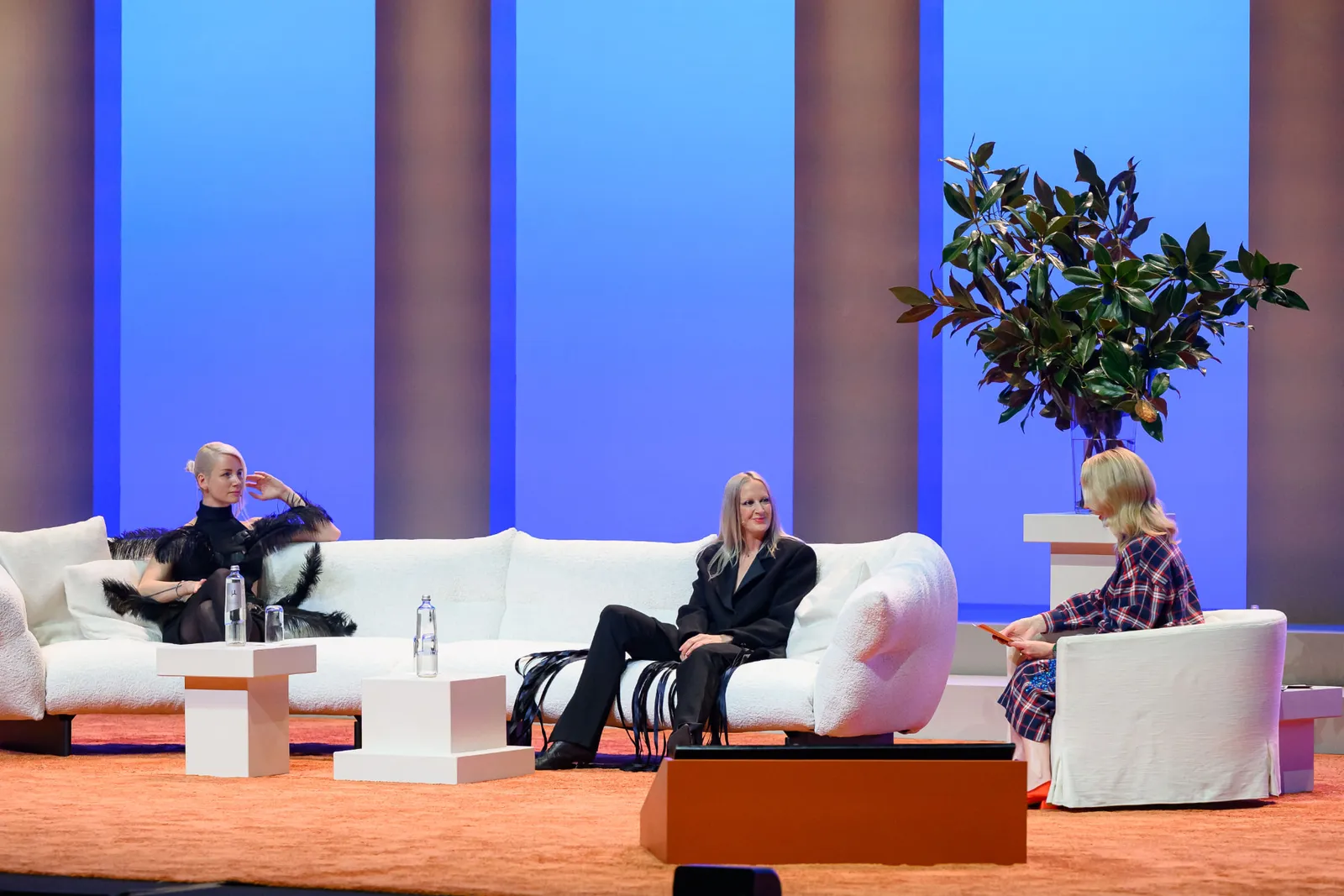
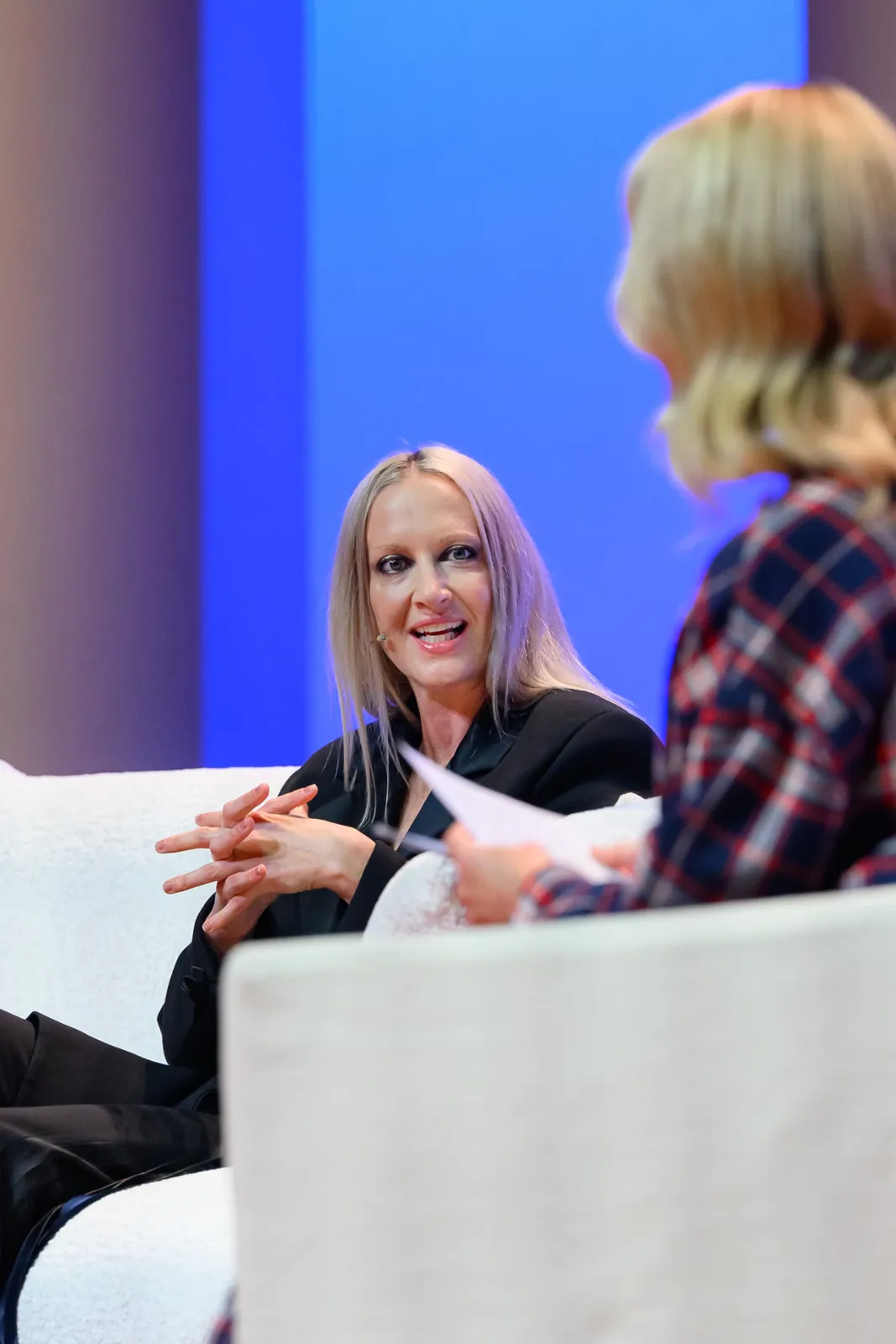
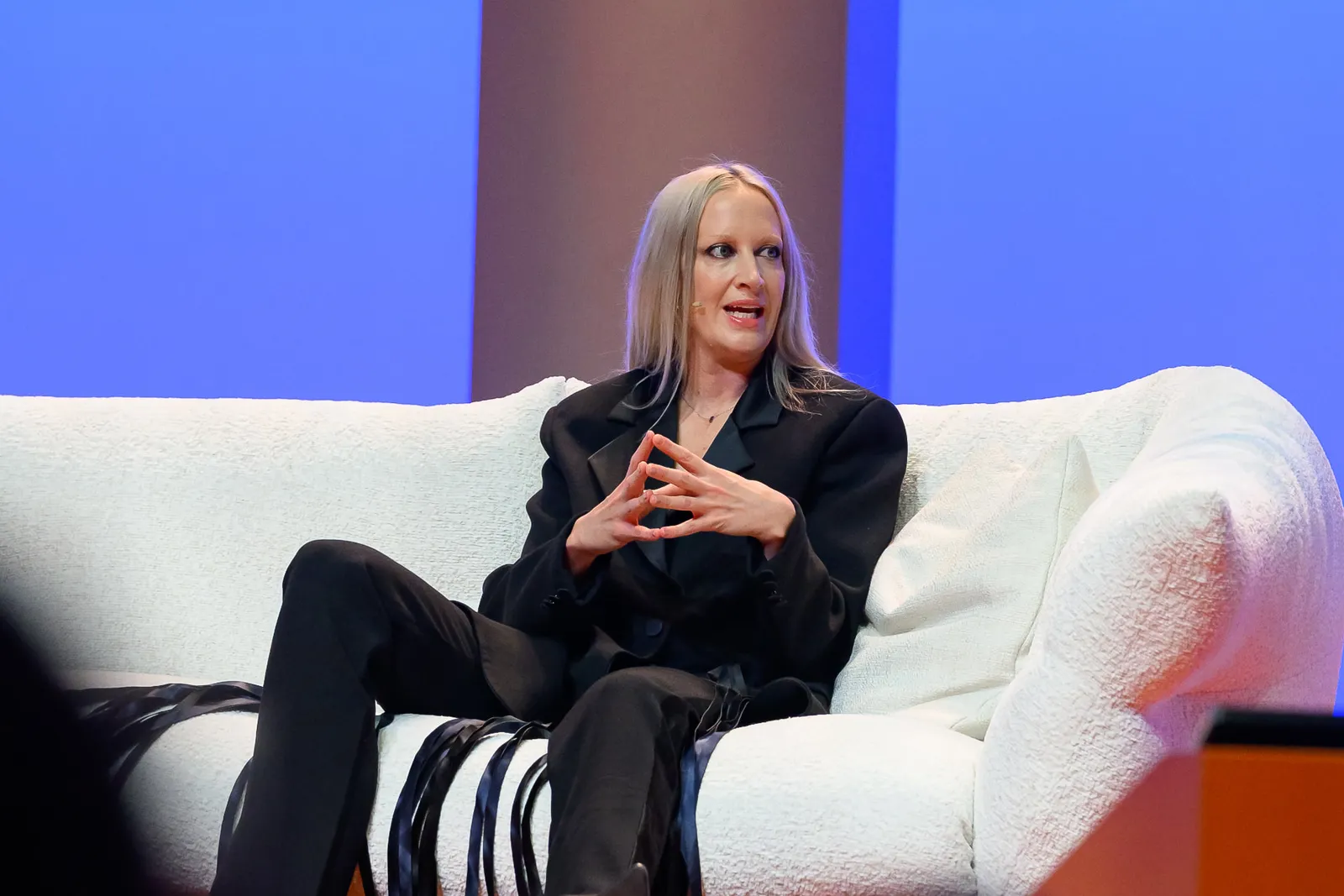
On Tuesday 3 November 2026, PATINA co-founder and CEO Leanne Elliott-Young joined FashionTech designer Anouk Wipprecht for Technology in Fashion and the AI Shift at Vogue Greece Change Makers IV in Athens, moderated by Sarah Bailey. Here's what she said about AI, trust and what happens after the purchase.

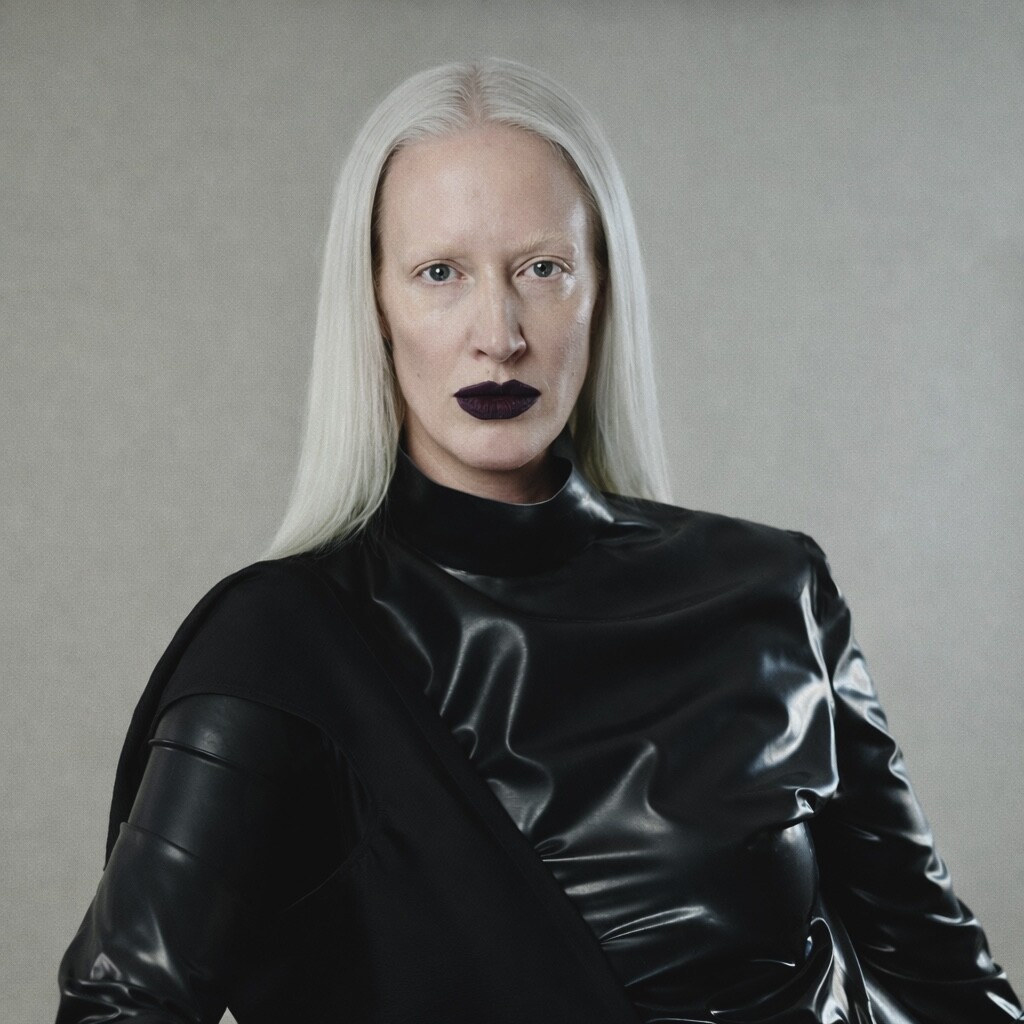
By Cat Taylor and Leanne Elliott-Young · · 6 min read
Leanne's case on Technology in Fashion and the AI Shift: the future of fashion is decided after the purchase. Technology doesn't make fashion less human; it gives time back for the human parts. AI and Digital Product Passports (DPPs) should carry the data and compliance work, so what reaches the customer is the maker, the material, the care and the story. The biggest risk is the slow loss of trust, and the biggest opportunity is the relationship between a brand and the person who owns its product, after the sale.
About the panel
Change Makers IV is Vogue Greece's international conference on the future of fashion, presented with Kathimerini. Now in its fourth edition, it brought together designers, creative directors, editors, artists and founders at Megaron – The Athens Concert Hall, with 14 sessions on the value of craftsmanship and culture, the promise and pitfalls of artificial intelligence, the changing face of beauty, and the business of image-making in the age of influence.
The line-up included Helena Christensen, Philippine Leroy-Beaulieu, David Gandy, Hussein Chalayan, Lacoste Creative Director Pelagia Kolotouros, Susie Lau, artist Anne Imhof, British Vogue's Funmi Fetto and Vogue Runway's Sarah Mower, with a special video appearance from Suzy Menkes. The day was hosted by actress Melia Kreiling and led by Vogue Greece Editor-in-Chief Elis Kiss.
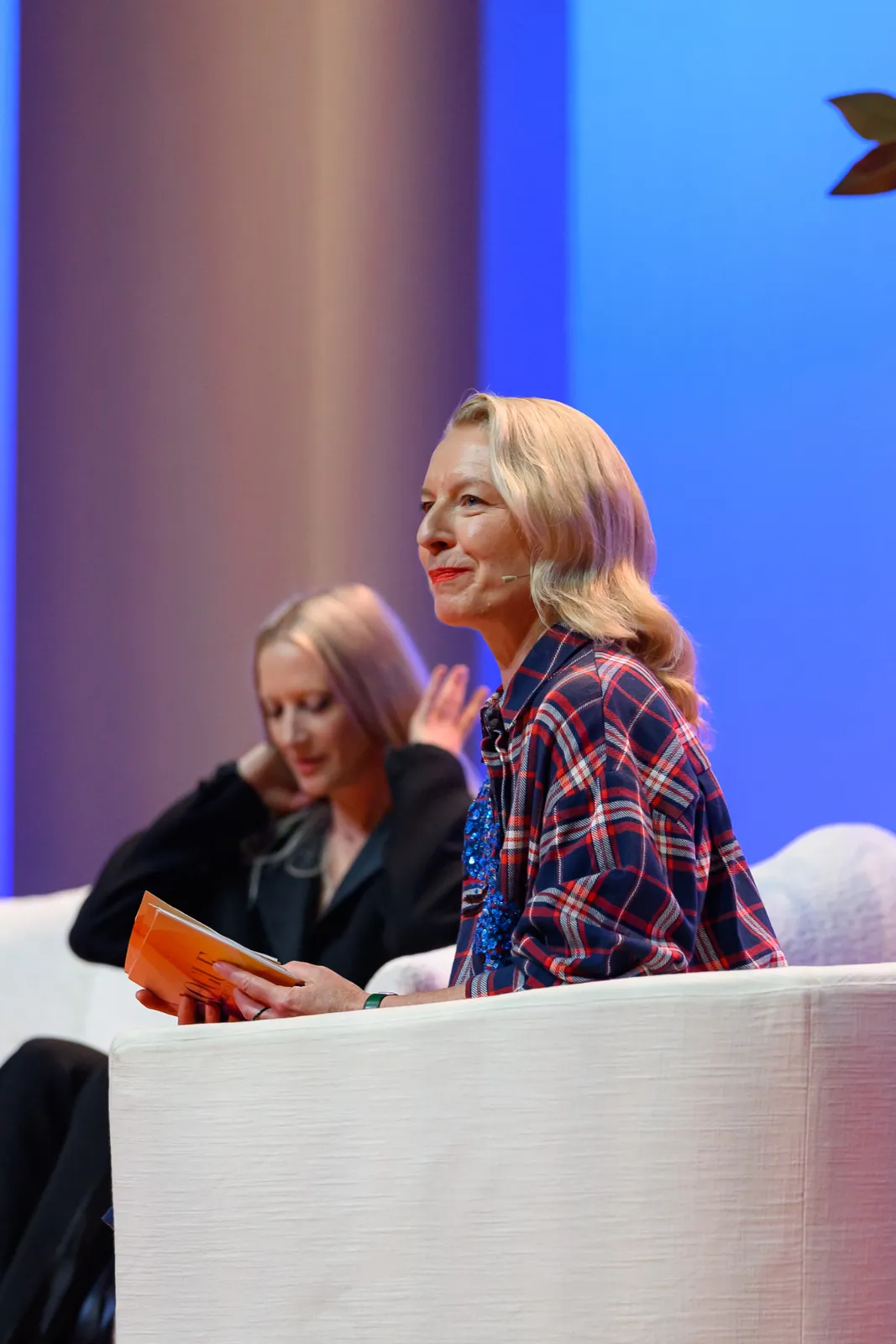
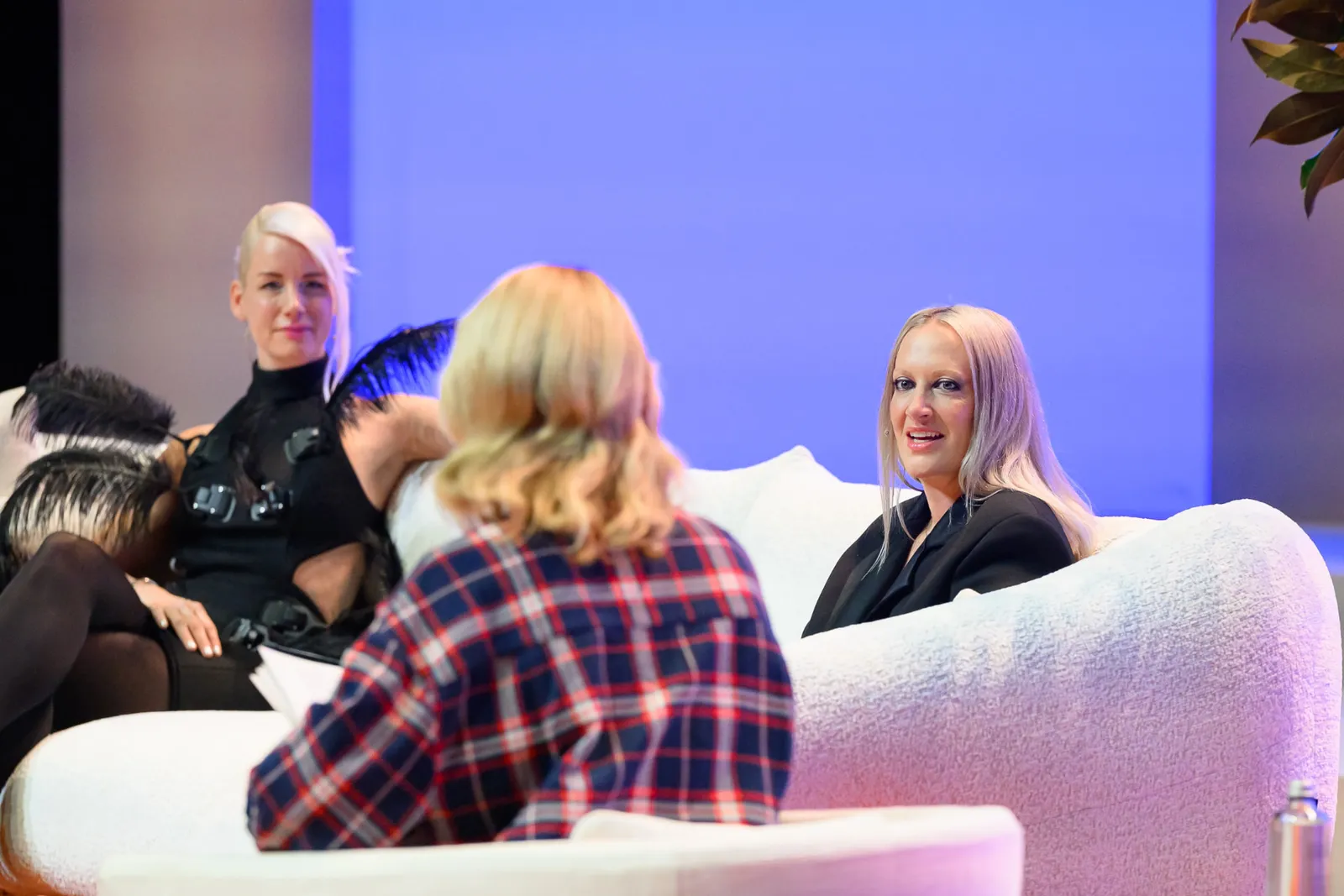
Technology in Fashion and the AI Shift took place from 13:00 to 13:30 in the Alexandra Trianti Hall. Leanne, co-founder of the Institute of Digital Fashion (IoDF) and now PATINA, joined FashionTech designer Anouk Wipprecht, a pioneering inventor and artist working at the intersection of fashion and technology. The conversation was moderated by Sarah Bailey, Journalist and Special Correspondent at Vogue Greece.
Leanne returned to Change Makers four years after first speaking there about fashion in digital spaces.
How did Leanne get into technology?
Leanne's route into technology came through marketing and culture, not engineering. At Nike's Room 72, connecting London, New York, Shanghai and Paris, she worked across sport, film, art, music and entertainment, using technology to create new experiences and draw communities into the brand, before social media became the default.
“I saw first-hand how technology can translate and transform culture,” she said. Seeing the full product journey, from the studio floor through production to the shop floor, shaped her belief that technology can be a democratic tool for change.
What is PATINA?
PATINA is the post-purchase operating system for fashion and luxury brands, built on Digital Product Passports. It connects a product's whole life: creation, ownership, care, repair, resale and take-back.
For customers, that means understanding more about a product and the brand behind it, booking care and repair, seeing resale value, and trading in or reselling through a brand-owned experience. It also opens up stories that are usually invisible: the creative process, the people and ideas behind a garment, right back to the cutting-room floor.
For brands, Leanne was clear it's about return on investment, not just compliance. “For years, brands saw resale as cannibalising their primary sales. We see it as an opportunity to bring that activity into the brand relationship.” Digital Product Passport rules are coming into force in the EU. PATINA turns what could be a mandated cost into a channel for trust, loyalty, care, repair and resale, and works alongside the product data and identification systems brands already use.
Does AI make fashion less human?
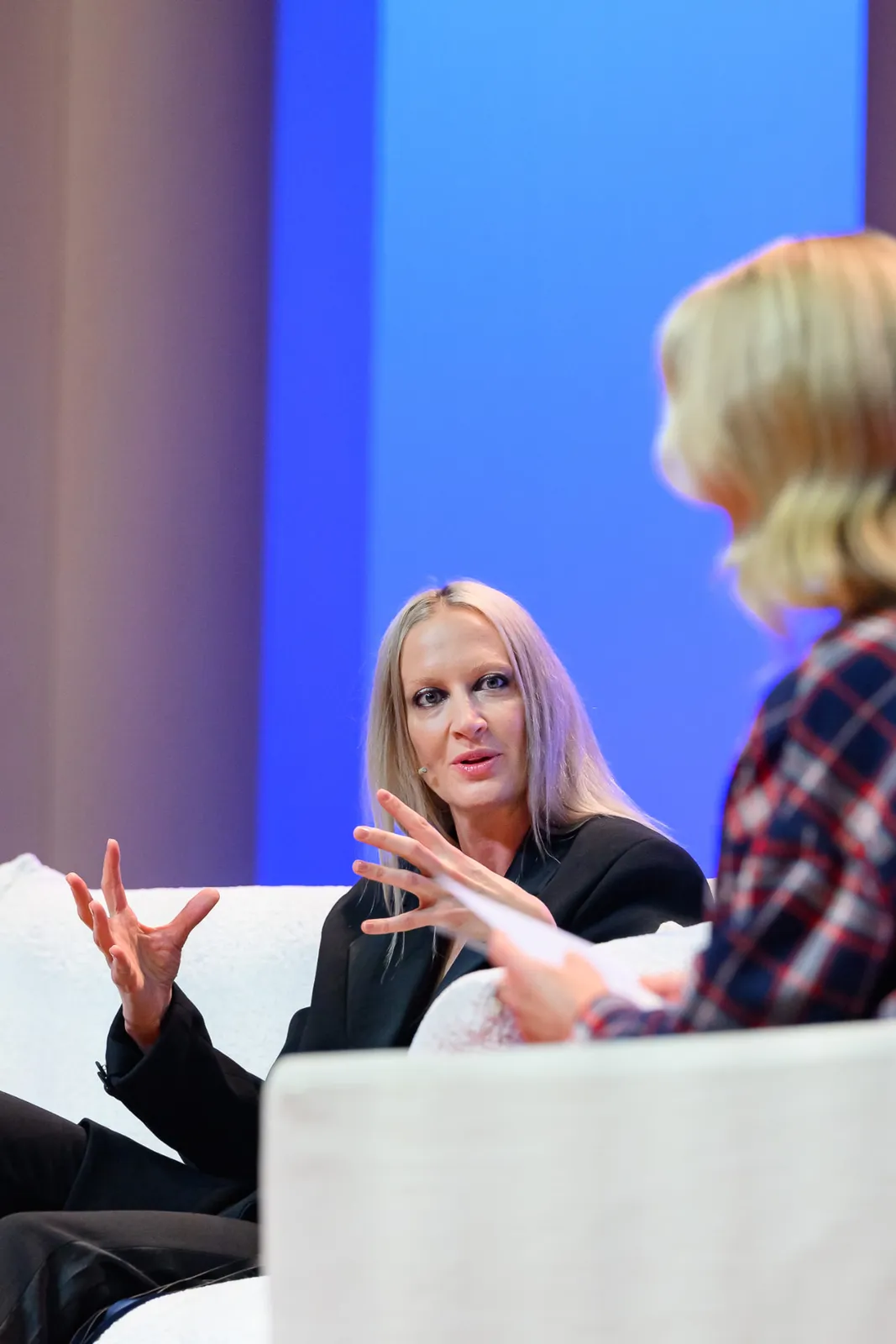
Leanne acknowledged the fear around AI, about jobs, data and who holds power, and called it healthy. But she argued technology doesn't replace what makes us human. It shows us more clearly what that is.
“When technology takes on the repetitive work, the data entry, the admin and the paperwork, it gives time back.” A designer who isn't buried in spreadsheets can spend more time designing. A brand that isn't drowning in compliance paperwork can spend more time telling the story of who made a garment and why.
That's how PATINA approaches Digital Product Passports: the data and regulation are necessary, but not very human. Technology should carry that load, so what reaches the customer is the maker, the material, the care and the memories attached to something they own.
“Technology connects cultures and people. It allows us to be more human.”
Can technology protect craft instead of erasing it?
Leanne believes so. A connected product can lead to a brand-owned space that shows the depth of decision-making behind a garment: who designed it, who made it, which materials were chosen and why. “Rather than technology erasing the artisan's touch, it can help champion it.”
What is the biggest risk of AI for fashion brands?
For Leanne, it isn't one dramatic misuse. It's the slow loss of trust. Most of the relationship between brands and customers now happens inside paid advertising, where algorithms decide what people see. Now AI can generate endless images and “authentic” content almost for free. “Brands are paying more and more to reach people who trust them less and less.”
PATINA gives brands a channel outside that environment. The product itself becomes the point of contact: you scan something you already own and arrive in a space the brand owns, with where it came from, what it's made of, how to care for it and what it's worth. There's no algorithm deciding what you see, and it's a relationship the customer chooses to start.
“When content becomes infinite, trust is what's scarce, and I think trust will be the most valuable thing a brand can own.”
Is a Digital Product Passport a way of tracking customers?
No, and Leanne called this a common misconception. A Digital Product Passport gives the product a persistent digital identity; it should not become an excuse to track its owner. People should be able to access materials, provenance, care and repair information without feeling every interaction is being harvested for advertising. “Privacy, clear consent and appropriate data controls have to be built into the experience, not added as an afterthought.”
She also cautioned that a passport makes information visible, but doesn't automatically prove every claim is true. The quality of the underlying data still matters.
What will make a designer valuable in an AI world?
Not how many images they can generate. “It will be their point of view: their taste, cultural intelligence, lived experience and ability to make something mean something to another human being.”
As generating images gets easier, provenance, craft, originality and the human decisions behind a product become more important, not less. PATINA can make those decisions visible: the design team, the makers, the materials and the process. “I want a future where technology doesn't flatten creativity into endless content, but helps us recognise and value the humans behind it.”
Do dreams inspire technology, or the other way round?
“My dreams inspire my work in technology, definitely.” Leanne starts with a human question: what isn't working, who is being left out, what relationship could be better? At IoDF, the question was how digital worlds could open up fashion. With PATINA, it's why the relationship between a brand and its customer should end at the moment of purchase. “Technology is the means, not the destination.”
Quick answers
Who spoke on Technology in Fashion and the AI Shift at Vogue Greece Change Makers IV?
PATINA co-founder and CEO Leanne Elliott-Young and FashionTech designer Anouk Wipprecht, moderated by Sarah Bailey, Journalist and Special Correspondent at Vogue Greece, at Megaron – The Athens Concert Hall on 3 November 2026.
Does AI make fashion less human?
Leanne Elliott-Young argues it doesn't: when technology takes on repetitive data and compliance work, it gives people time back for creativity, craft and connection.
What is PATINA?
PATINA is the post-purchase operating system for fashion and luxury brands, built on Digital Product Passports, connecting care, repair, resale and take-back in a brand-owned experience.
Is a Digital Product Passport used to track customers?
No. A Digital Product Passport gives the product a digital identity. It should not be used to track its owner, and privacy and consent should be built in from the start.
What is the biggest risk of AI for fashion brands?
According to Leanne Elliott-Young, the slow loss of trust, as AI-generated content floods paid channels. Brand-owned, post-purchase experiences help rebuild it.
Want to see what happens after the sale? Get in touch.
Get in touch →Meet the founders →