

← Proof · Press
Future Proof: PATINA in Vogue Singapore
Vogue Singapore · InVOGUE Tech · Words by Nurul Firdousee · Online and in print, July/August 2026 “Audacity” issue, cover star Tanya Chua
By Nurul Firdousee · Vogue Singapore
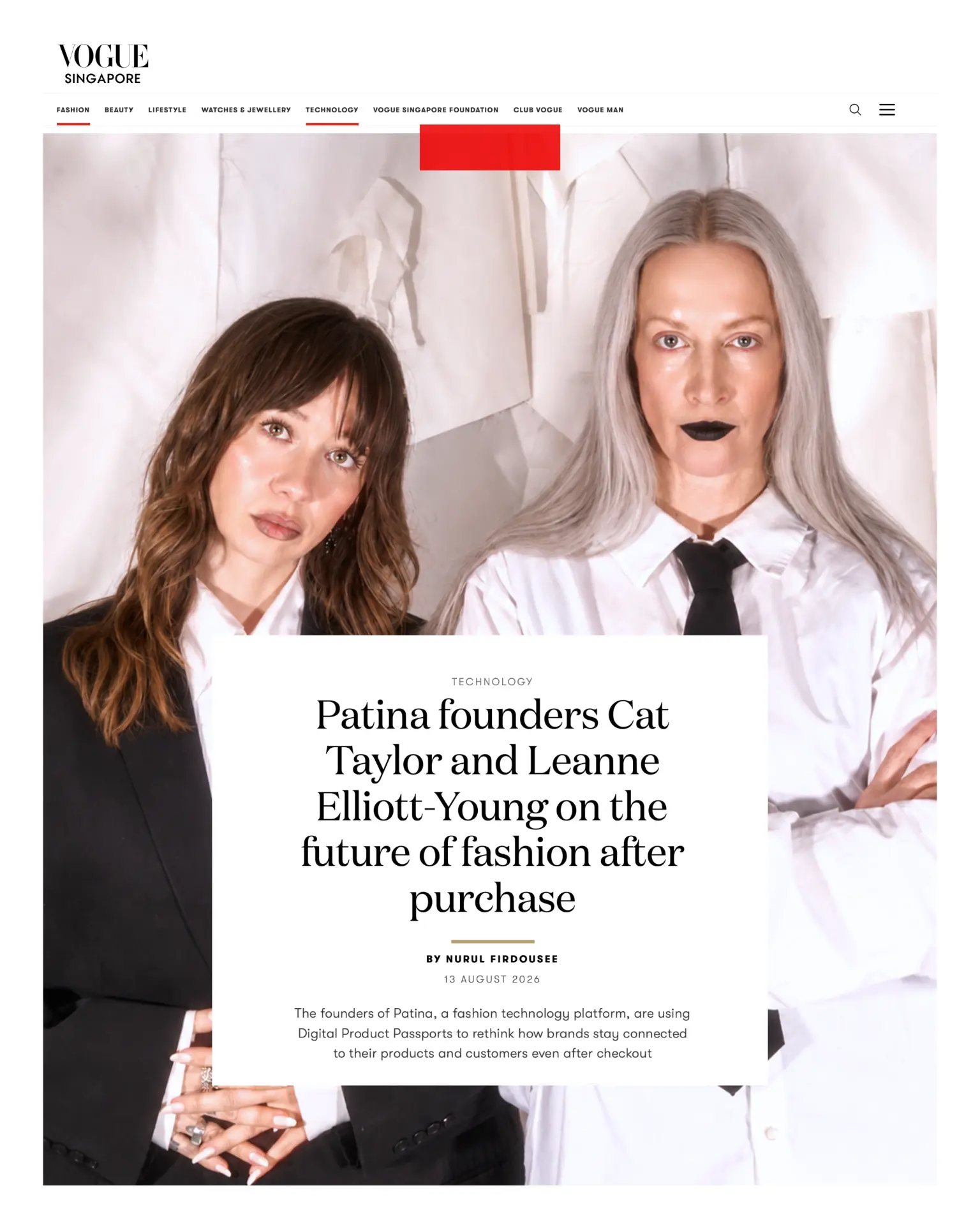
Vogue Singapore's InVOGUE Tech section introduced PATINA to its readers in “Future Proof”, a four-page interview with co-founders Leanne Elliott-Young and Cat Taylor. The piece explores how PATINA is rethinking what fashion can do after the first sale, from repair and resale to access and brand storytelling.
The product is no longer the end of the transaction; it's the beginning of an ongoing conversation.
Digital Product Passports are a customer opportunity, not just compliance
When the EU brought the Digital Product Passport into its Ecodesign for Sustainable Products Regulation, PATINA's founders saw more than another compliance demand. They saw a future where every garment carries its own verified record, and where that record becomes a new way for brands to speak to customers.
“The biggest mistake fashion can make is treating DPPs as a compliance exercise rather than a customer opportunity. Every product is potentially a media channel, a service channel, a loyalty channel and a commerce channel. The product itself can become the relationship.”
“Fashion has spent decades innovating around how to get products into customers' hands, with very little innovation after the sale. That is where the next billion-pound opportunity sits. The brands that win will stop asking, ‘How do we comply?’ and start asking, ‘How do we create value after purchase?’”
What post-purchase commerce looks like for customers
“For us, the product is not data. The data is simply the infrastructure that powers the experience.”
“Our vision is incredibly simple: tap the product and everything you need is there. Book a repair. Authenticate an item. Resell a product. Access an event. Contact the brand. Unlock exclusive content. Join a community.”
How post-purchase commerce changes ownership for brands
Brands spend heavily to acquire a customer, sell once, then pay again to win the same customer back. Meanwhile, resale platforms and third parties build businesses around products the brand created.
“Post-Purchase Commerce asks brands to rethink that relationship. The products they design, manufacture and sell can remain connected to them throughout their entire lifecycle. Ownership does not end at the point of sale anymore.”
“Instead of relying entirely on social platforms and algorithms, brands can engage customers through products they already own and value. The future customer relationship is built through owned products.”
The cap that became a key to London Fashion Week
The PATINA × Maximilian Raynor cap was one of PATINA's earliest demonstrations of post-purchase commerce. Its Digital Product Passport became a key to London Fashion Week access.
“The cap became a key. For the first time, the product becomes an active participant in the customer journey. With our system, brands can see how products are being engaged with, what experiences customers value and how relationships evolve over time. Compared to traditional CRM systems, this is far more contextual.”
Provenance, craft and honesty in luxury
“DPPs provide an opportunity to protect and verify those claims in ways we have never been able to before. At the same time, transparency creates accountability. Brands can no longer simply tell stories. They increasingly need to substantiate them.”
Why Digital Product Passports will last where NFTs and the metaverse didn't
“Because they solve real problems. DPPs and Post-Purchase Commerce create immediate value for both consumers and brands. They help people authenticate products, access services, repair items, resell goods, unlock experiences and engage directly with brands.”
“Technology companies that do not understand culture will struggle, because behaviour change is ultimately a cultural challenge, not a technical one.”
Built for independent designers as well as luxury houses
“In many ways, smaller brands may benefit the most. Emerging designers often have incredibly engaged communities but limited resources. Post-Purchase Commerce allows them to create direct relationships with customers, protect authenticity, manage resale opportunities and build ongoing engagement without relying entirely on third-party platforms.”
“If only the largest luxury groups can participate, we have missed the point. Our belief is that the technology should become increasingly invisible. Customers should not need to understand it. They should simply benefit from the experience.”
The wardrobe of the future
“I think we will start to see products carry their own living histories. Imagine walking into a vintage store and being able to see who owned a garment previously, where it travelled, what cultural moments it was part of and how it evolved over time.”
“A product will not just tell you what it is. It will tell you where it has been and who made it. Products stop being static objects and become living cultural artefacts whose stories continue long after they leave the shelf.”
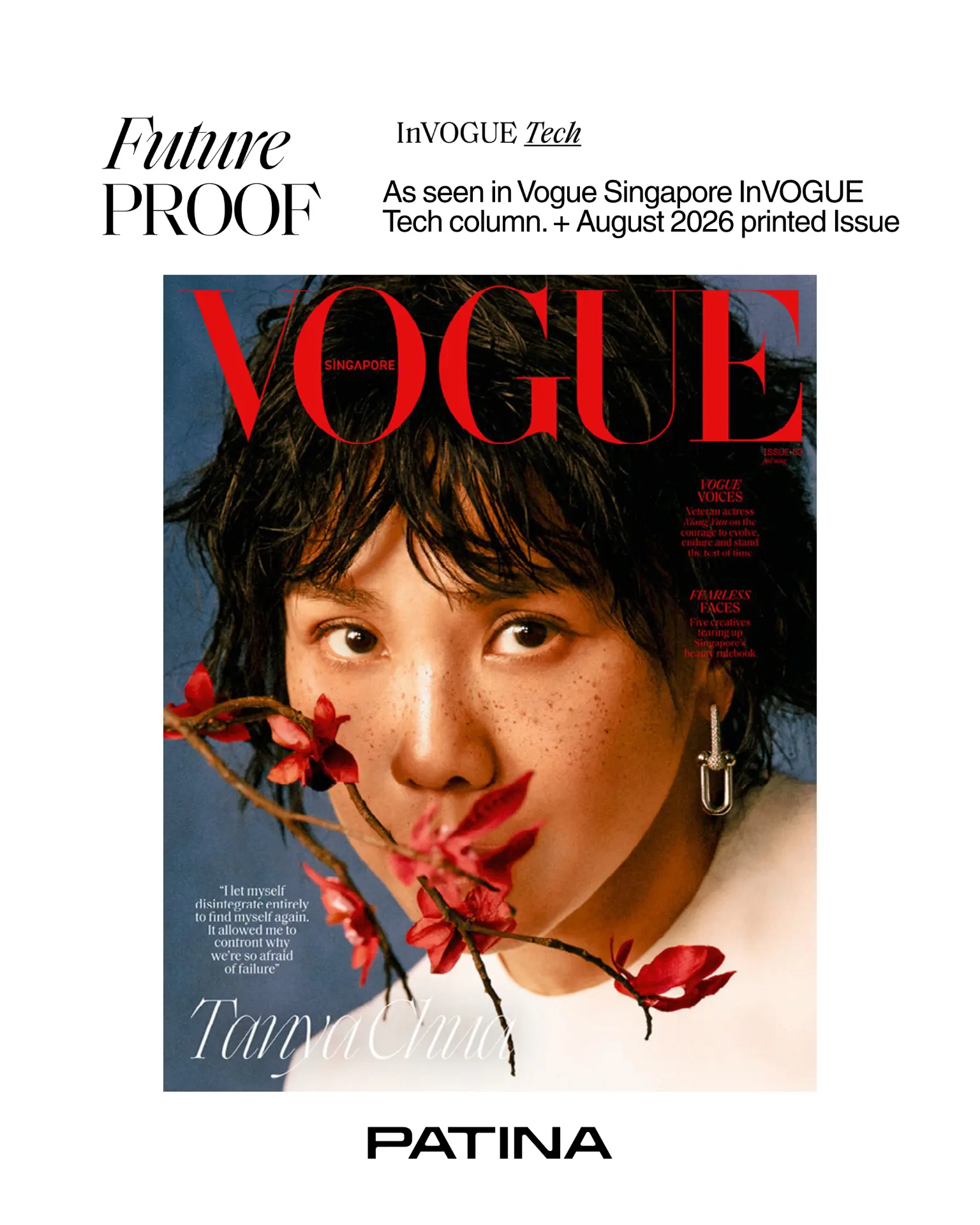
Read the full interview in Vogue Singapore.
Read the original on Vogue Singapore →